
Allegan County Projected Versus Actual Release
A projected date estimates or marks a legal point before physical release. For an MDOC prisoner, OTIS primarily uses Parole Board Jurisdiction Date, also called the Earliest Release Date. It marks the first point of Parole Board jurisdiction under the sentence calculation. The Board can grant parole later, deny it, reconsider it, or suspend a grant when adverse information appears.
The Maximum Date or Maximum Discharge Date is the outer term shown under the applicable calculation. Date Paroled is different because it looks backward to the day the person actually left prison on parole. A person can remain supervised after that physical release. County-jail calculations use a separate rule and must never be substituted for MDOC fields.
A pretrial Allegan County detainee may have no fixed release date. Bond, a dismissal, a plea, a sentence, a hold, or another court order may decide the next custody event. The current jail lookup can confirm that the person is still listed, but it does not publish a projected release field or historical release calendar.
A sentenced person can also have more than one date in view. The judgment may state a term and credit for time already served. Jail or MDOC staff then apply the rules that fit that sentence. Parole eligibility, a maximum term, an anticipated county-jail exit, and the actual release event answer different questions. Copying one field into another label can make a date appear more certain than the official record allows.
Note: An OTIS earliest release date marks parole jurisdiction, not a promised day of departure from an MDOC prison.
Find Allegan County Projected Release Dates
The right route begins with the sentence. OTIS is correct for a person serving an MDOC prison term. Allegan County Corrections and the sentencing court are correct for a county-jail sentence. The court record supplies the judgment, credit for time served, and any amended terms that feed the official calculation.
- Determine whether the person is pretrial, serving an Allegan County jail sentence, or serving an MDOC prison sentence.
- Read the actual judgment for the term, jail credit, concurrent or consecutive sentences, and later amendments.
- For a county-jail sentence, ask the Corrections Center for its official calculation. Do not calculate from the good-time ratio alone.
- For an MDOC sentence, search OTIS by MDOC number when possible, then read the Earliest Release Date and Maximum Date.
- Review parole status, misconduct, detainers, and court changes that could affect the displayed date.
- Confirm with the custodian. After release, replace the projection with an actual release, parole, or discharge record.
The official OTIS search form is the public starting point for Michigan state-sentence dates.
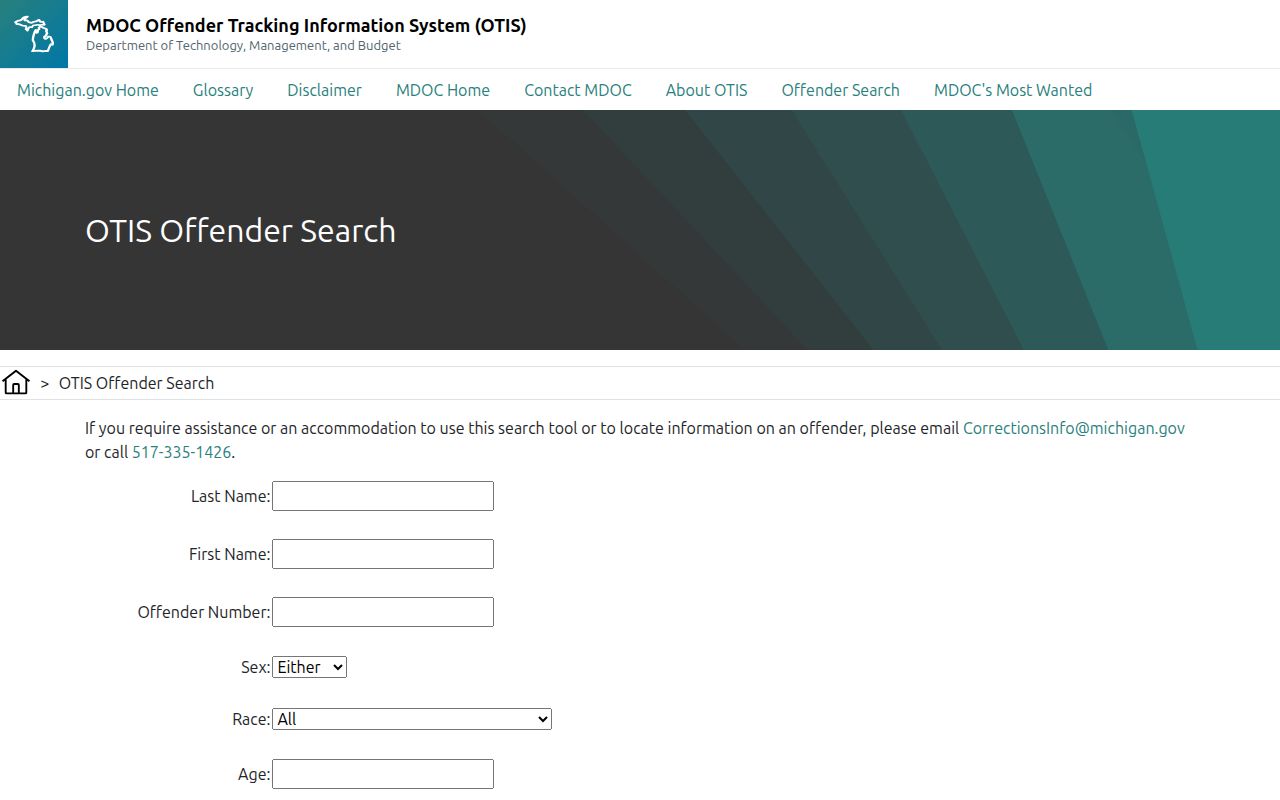
The search fields help locate the correct Michigan record, but the detail record and its status must be reviewed before any date is interpreted.
If the person remains in the county jail, start with the 57th District or 48th Circuit record tied to the case. The district court handles misdemeanors and preliminary felony stages. The circuit court holds felony judgments and sentences. Compare the latest order with the Corrections Center's calculation because an amended sentence, new credit, or other hold may not be clear from an earlier docket entry. A current-only inmate listing can confirm continued listing, but it cannot supply the missing calculation.
For a state prisoner, do not search the county roster for an MDOC eligibility date. A person connected to an Allegan County case may be housed at any prison MDOC assigns. OTIS follows that statewide jurisdiction. Its location field and status help confirm whether the record still concerns prison custody, parole, probation, or discharge before the date fields are used.
Read Allegan County OTIS Dates
OTIS serves people currently or formerly within MDOC jurisdiction or supervision. It is not the historical source for someone whose only custody was the Allegan County jail. Search by MDOC number for the most precise match, or use a last name with refiners such as first name, age range, sex, race, and offender status.
| OTIS field | Meaning | Release caution |
|---|---|---|
| Status | Current reported MDOC legal state | Read it before interpreting any date |
| Parole Board Jurisdiction Date | Earliest Release Date for Board jurisdiction | Eligibility, not a promised release |
| Maximum Date | Outer sentence date under the applicable calculation | Legacy credits and sentence changes may affect it |
| Date Paroled | Historical date the person left prison on parole | The person remains supervised after release |
| Location | Facility or supervising place | Check for transfers and community supervision |
The official OTIS field definitions explain the earliest and maximum dates and warn that projected information can change. OTIS public information generally remains displayed for three years after the latest MDOC discharge, subject to earlier legal removal. An older missing result calls for the court or MDOC records, not a guess.
Status can resolve an apparent conflict. PRISON indicates continuing state custody, though OTIS notes that some people may be temporarily housed elsewhere. PAROLE means the person physically left prison but remains supervised. PROB marks MDOC-supervised circuit probation. DISCHRG means the relevant MDOC jurisdiction ended, but MDOC warns that discharge can follow successful supervision, reaching the maximum, or death. The status, date, location, and court file belong together.
The OTIS status and date explanation supplies the definitions used to read these fields.
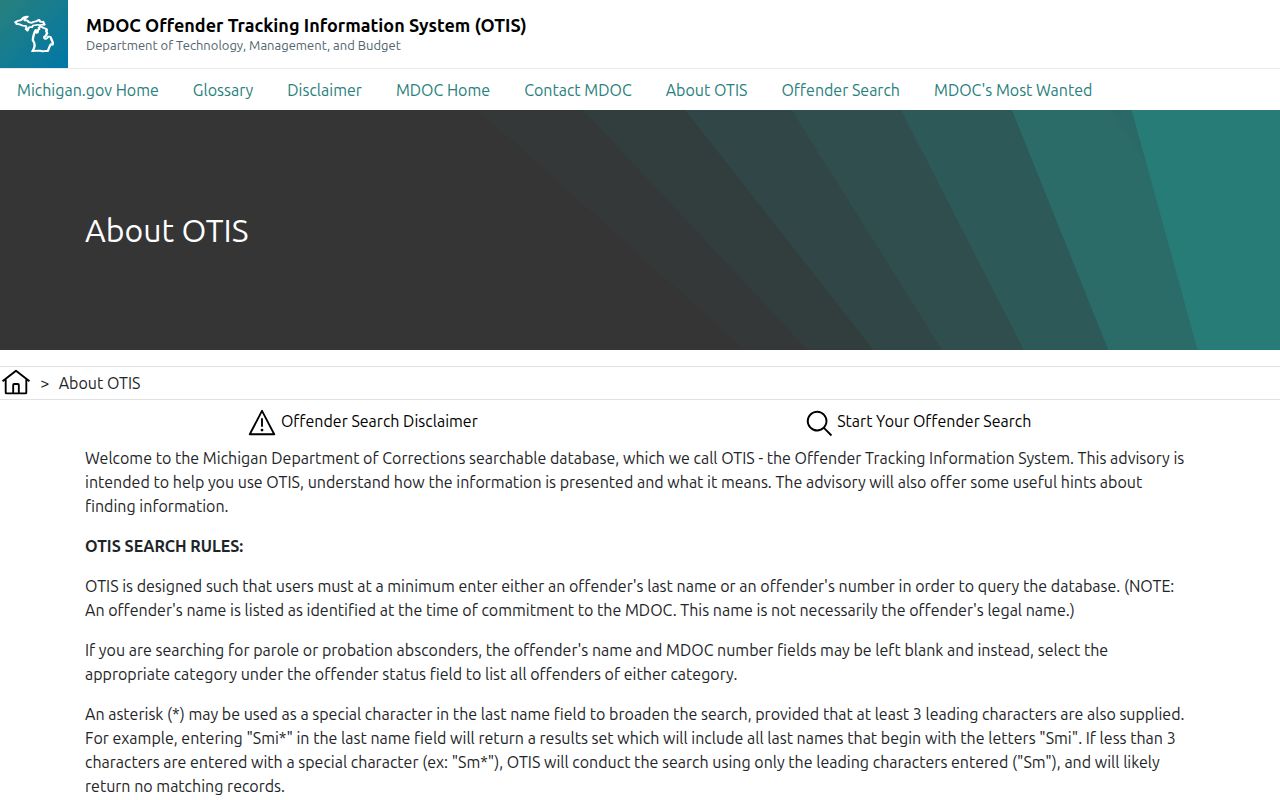
The definitions reinforce the key distinction: an earliest release field concerns parole jurisdiction, while Date Paroled records an event that already happened.
Michigan Rules for Allegan Release Dates
Michigan does not use one universal “serve 85 percent” rule. Michigan's indeterminate sentencing system pairs a judicial minimum with a maximum. For covered prisoners, Truth in Sentencing requires the entire judicial minimum to be served in prison before parole consideration.
MDOC describes the coverage generally as specified assaultive crimes committed on or after December 15, 1998, and other covered felonies committed on or after December 15, 2000. Those rules remove good-time or disciplinary credits against the minimum and use disciplinary time that the Parole Board must consider. MCL 800.34 and the law tied to the offense date control. A flat percentage cannot replace that review.
Some legacy prisoners fall under different provisions. MCL 800.33 addresses disciplinary and special credits for qualifying offense dates and excludes prisoners governed by disciplinary time from those older credits. OTIS warns that its maximum date can change where eligible credits are not awarded. The Michigan correctional institutions statutes provide the governing text.
Parole remains a decision after eligibility. The Michigan Parole Board is the sole paroling authority for MDOC prisoners. Serving the minimum creates the point at which the Board may act; it does not create a right to leave on that day. A grant can be later than the earliest date, and new adverse information can interrupt a grant before physical release. That is why the Board action, current OTIS status, and eventual Date Paroled must be checked separately.
Note: Truth in Sentencing affects covered MDOC minimums; it does not supply an Allegan County jail release calculation.
Allegan County Jail Good Time
Allegan County has a distinct jail rule. The county inmate guide says an eligible sentenced resident who follows facility rules receives one day of reduction for each six days served. MCL 51.282 provides the same county-prisoner ratio and permits restoration of good time lost for a minor infraction when especially good conduct supports it.
MCL 51.283 requires the jail's rules and good-behavior allowances to be posted. It also places responsibility on an eligible prisoner to call the entitlement to the sheriff or deputy's attention. The Allegan inmate guide is the local source for the published ratio.
The ratio alone cannot produce a safe release date. It does not resolve a lost or restored day, credit for time already served, another hold, concurrent or consecutive terms, or an amended court order. Corrections staff must make the official Allegan County calculation. This local one-for-six rule must never be applied to an MDOC Earliest Release Date.
The county calculation applies to eligible sentenced residents who follow facility rules. It does not create a projected date for a pretrial person waiting on the court. It also does not decide where the person goes when the jail term ends. A detainer can lead to transfer into another agency's custody even when Allegan's sentence calculation has reached its endpoint. Ask Corrections both for the official date calculation and whether another custodian is expected.
Why Allegan Release Dates Change
Several events can move or invalidate a public-facing date. Some change the sentence calculation. Others do not alter the term but prevent physical release on the date a reader expected. The custodian and court record are needed to tell those categories apart.
| Factor | Possible effect | Best confirmation |
|---|---|---|
| Misconduct or lost credit | Changes eligible credit or affects parole review | MDOC or county calculation |
| Detainer or another hold | Moves the person to another custodian instead of the community | Holding agency and release record |
| Court amendment | Changes credit, term, or sentence interaction | Updated judgment and docket |
| Concurrent or consecutive terms | Changes how multiple sentences run | Judgment and MDOC calculation |
| Parole grant, denial, or suspension | Changes whether prison release follows eligibility | Parole Board and OTIS |
| Good-time loss or restoration | Changes an eligible county-jail calculation | Allegan County Corrections |
A transfer is not community release. Likewise, parole is physical release from prison followed by supervision, not discharge from the sentence. These distinctions matter whenever a date changes without a person returning home.
Jail credit and sentence interaction deserve special care. Credit for time served comes from the judgment and official calculation. Concurrent terms can run together, while consecutive terms run one after another. A later amended order can change either the credited time or the way terms interact. No public search field is a safe substitute for reading the current judgment and asking the custodian to apply it.
Confirm Allegan County Release Dates
Use the Allegan County Sheriff's Office & Corrections Center at 640 River Street, Allegan, MI 49010, or 269-673-0500 for a county-jail calculation and physical release confirmation. Use the sentencing court for the controlling order. For an MDOC prisoner, pair OTIS with MDOC confirmation and the court judgment.
Once release occurs, use an actual event field. Date Paroled records prison release to parole. DISCHRG shows the end of MDOC jurisdiction for that sentence, with the caveats in OTIS. MI-VINE may supply a custody event, and the originating agency can provide a release or transfer record. Registration details are covered on the Allegan County VINELink Inmate Search page.
The Allegan County released-inmate search also explains how county, state, court, and federal paths fit together after a person disappears from a live roster. A projection should be retired as soon as an actual release, parole, transfer, or discharge record is available.